Microsoft Spreadsheet Compare & Alternatives
What is Spreadsheet Compare?
Spreadsheet Compare is a Microsoft tool for comparing Excel workbooks. It is part of the Spreadsheet Inquire add-in, which is included with certain editions of Microsoft Excel. You can launch Spreadsheet Compare using the Compare Files command on the Inquire tab in Excel or directly from the Windows Start menu.
If you simply want to know "What changes did my colleagues make to a shared Excel file?", Spreadsheet Compare can help you identify those changes quickly and easily.
How to Download and Install Spreadsheet Compare?
Spreadsheet Compare is included with Microsoft 365 Apps for enterprise, but it is not available in all editions of Microsoft Excel. If you use a personal or business edition of Microsoft 365 that does not include the Spreadsheet Inquire add-in, you will not have access to Spreadsheet Compare.
Source:
Can I download Spreadsheet Compare?
No. Spreadsheet Compare cannot be downloaded or installed as a standalone application. It is installed as part of a supported Microsoft Office package, such as Microsoft 365 Apps for enterprise, which you can download from Microsoft's official website.
Be cautious of websites advertising "Spreadsheet Compare Download". These pages typically offer third-party comparison tools that are not affiliated with Microsoft's Spreadsheet Compare utility or the Spreadsheet Inquire add-in.
Using Spreadsheet Compare to Compare Two Excel Files
How to Launch Spreadsheet Compare
There are two ways to launch Spreadsheet Compare:
-
From Microsoft Excel: Open the Inquire tab and click Compare Files.

-
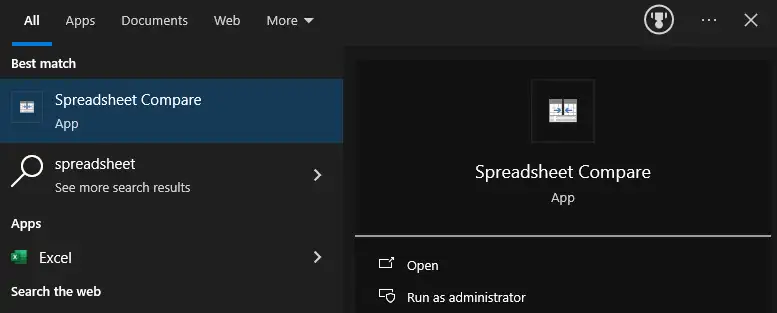
From the Windows Start menu: Type Spreadsheet Compare into the Start menu search box. Windows will display Spreadsheet Compare as a standalone application that you can launch directly.
What If the Inquire Tab Is Missing?
If you don't see the Inquire tab in Microsoft Excel, you may need to enable the Inquire add-in.
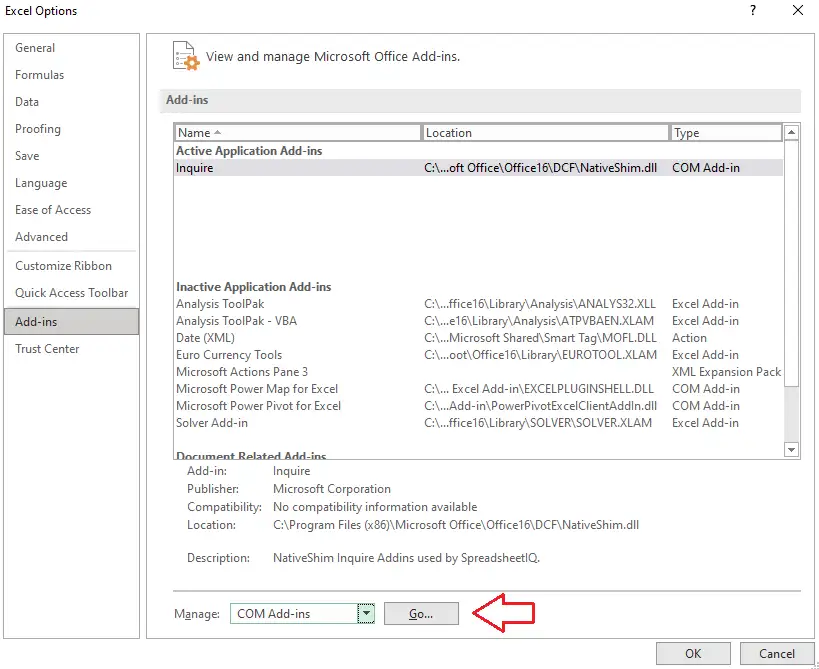
Go to File → Options → Add-ins. At the bottom of the window, select COM Add-ins from the Manage dropdown and click Go.
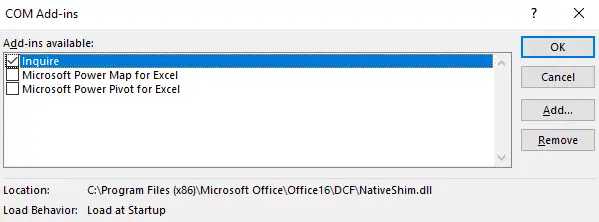
In the list of available COM add-ins, find Inquire, select its checkbox, and click OK.
What if Inquire is not listed?
If Inquire does not appear in the list of COM add-ins, your edition of Microsoft Office most likely does not include this feature.
In that case, you can use a dedicated Excel comparison tool such as xlCompare to compare your Excel files and identify differences.
How to Compare Two Excel Files Using Spreadsheet Compare
Launch Microsoft Excel and open the two workbooks you want to compare. Go to the Inquire tab and click Compare Files.
A file selection dialog will appear, allowing you to choose which two workbooks to compare. This is especially useful if you have more than two Excel files open.
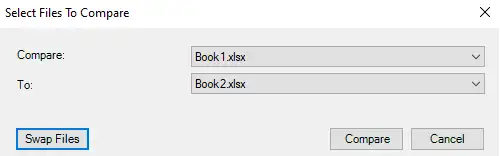
Click Compare to start the comparison and view the results.
Spreadsheet Compare displays the comparison results in its own window rather than directly in Microsoft Excel.
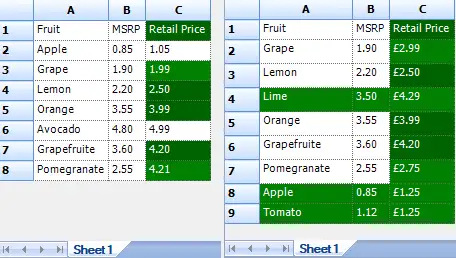
To display the original Excel cell formatting, click Show Workbook Formatting on the Spreadsheet Compare toolbar. This option is disabled by default.
Understanding the Excel File Comparison Results
Spreadsheet Compare highlights differences in green within the worksheets and displays a detailed list of changes in a separate panel below the spreadsheets.
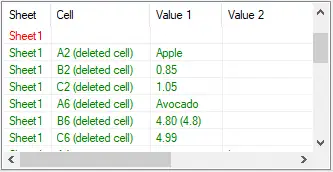
The list includes all detected differences, such as inserted and deleted rows and columns, changes to cell values and formulas, and modifications to cell formatting.
The Export Results and Copy Results to Clipboard commands let you save the comparison results or copy them to share with colleagues, for example, by email.
Source:
Compare two versions of a workbook by using Spreadsheet Compare
Strengths and Weaknesses of Spreadsheet Compare
Comparing Two Versions of the Same Excel File
This is exactly what Spreadsheet Compare is designed for. If you have two versions of the same Excel file, one of which has been modified by a colleague, Spreadsheet Compare will identify the differences between them.
No Support for Key Column Comparison
This is one of the biggest limitations of Spreadsheet Compare.
Many Excel comparison tasks involve two different files rather than two versions of the same workbook. For example, you might need to compare product lists sent to different suppliers.
For this type of data, corresponding rows must be matched using one or more key columns, such as a product ID or SKU, rather than their position in the worksheet.
Unfortunately, Spreadsheet Compare does not support key-based row matching, making it less suitable for comparing structured tables where records may appear in a different order.
Limited Comparison Report Analysis
In this example, Spreadsheet Compare correctly identifies two deleted rows and two inserted rows. However, it does not provide an option to display only added rows, only deleted rows, or matching rows.
Simply exporting comparison results to a file is not enough. Users also need convenient tools for analyzing the comparison report, filtering differences, and displaying only the information relevant to their task.
No Option to Transfer Changes Between Excel Files
For example, you may need to update your workbook with new records added by a colleague. Spreadsheet Compare can identify these differences, but it does not allow you to transfer the missing records from one file to another.
This functionality is available in dedicated Excel comparison tools such as xlCompare, which lets you review and merge changes between workbooks.
No Command-Line Support
The lack of command-line support is another limitation of Spreadsheet Compare, particularly for developers and teams working with version-control systems.
Spreadsheet Compare does not provide built-in integration with version-control systems such as Git, SVN, or Perforce.
If you need to automate Excel file comparisons or integrate them into your version-control workflow, consider a dedicated tool such as xlCompare, which supports both command-line operations and version-control integration.
Conclusion
Spreadsheet Compare is an excellent choice for straightforward Excel file comparisons, especially when both workbooks have a similar structure.
However, if you need to compare unsorted data, extract and export added or matching records, or transfer changes between two workbooks, we recommend considering xlCompare as a more powerful alternative.
xlCompare offers key-column comparison, flexible filtering and reporting, and the ability to merge changes between Excel files—all within an intuitive, easy-to-use interface.
Best Alternative to Microsoft Spreadsheet Compare
Let's perform the same comparison task using both xlCompare and Spreadsheet Compare.
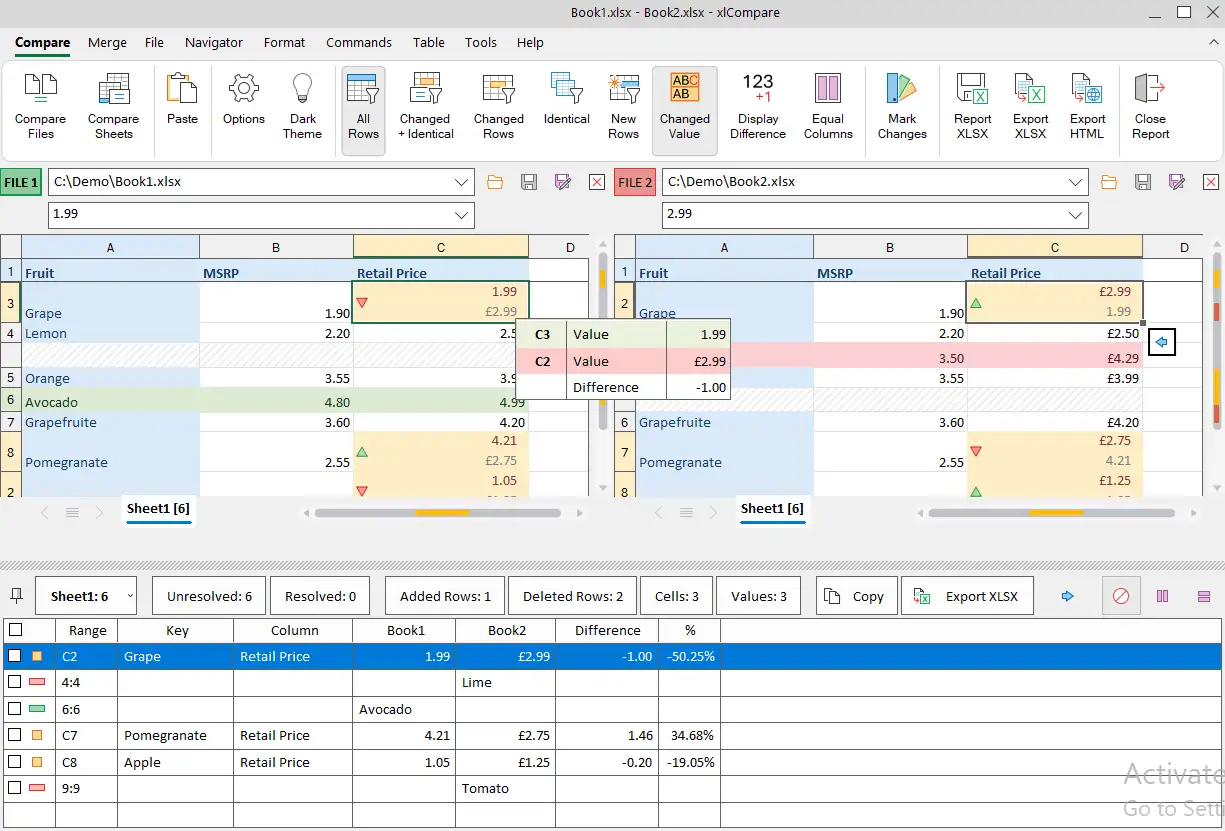
Example of the Comparison Report provided by the xlCompare
Results of Comparing Two Tables
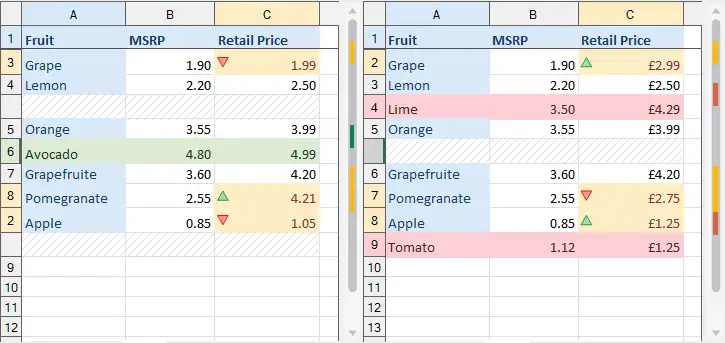
xlCompare delivers more accurate results by matching corresponding rows using key columns.
Formula Comparison
Spreadsheet Compare compares formulas as text, while xlCompare analyzes each formula by breaking it down into individual expressions and comparing them separately.
This approach produces more accurate comparison results by distinguishing actual formula changes from reference shifts caused by inserted or deleted rows.
List of Differences
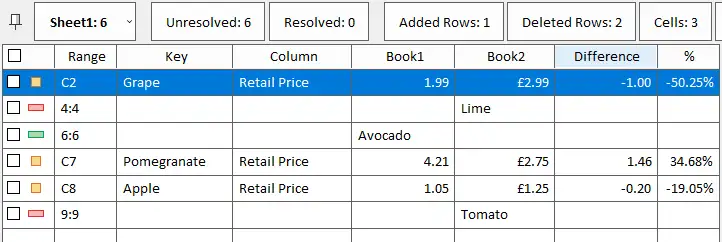
The Legend in xlCompare provides a clearer overview of the changes detected between two Excel files.
Click any item in the Legend to filter the comparison results and display only differences of the selected type.
Transferring Data Between Excel Files
This is where xlCompare has a clear advantage over Spreadsheet Compare. Its quick merge commands let you transfer records from one table to another in just a few clicks.
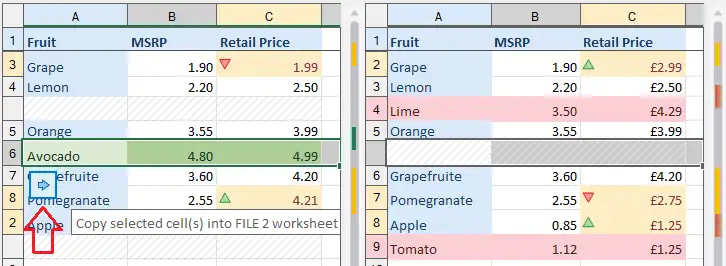
Merge button in the xlCompare
Exporting Comparison Results
xlCompare offers a wider range of reporting and export options, from saving a simple list of differences to exporting an entire Excel workbook with all changes highlighted in color.
Command-Line Support
Command-line support is one of xlCompare's core features. xlCompare is designed to compare Excel files stored in version-control systems such as SVN, Git, and Perforce, making it a practical tool for developers and teams working with version-controlled spreadsheets.
Where Can I Download xlCompare?
Download xlCompare using the link below and install it on your computer. No registration or payment is required to download, install, or try xlCompare.